Bodily-tactile sense on the agenda
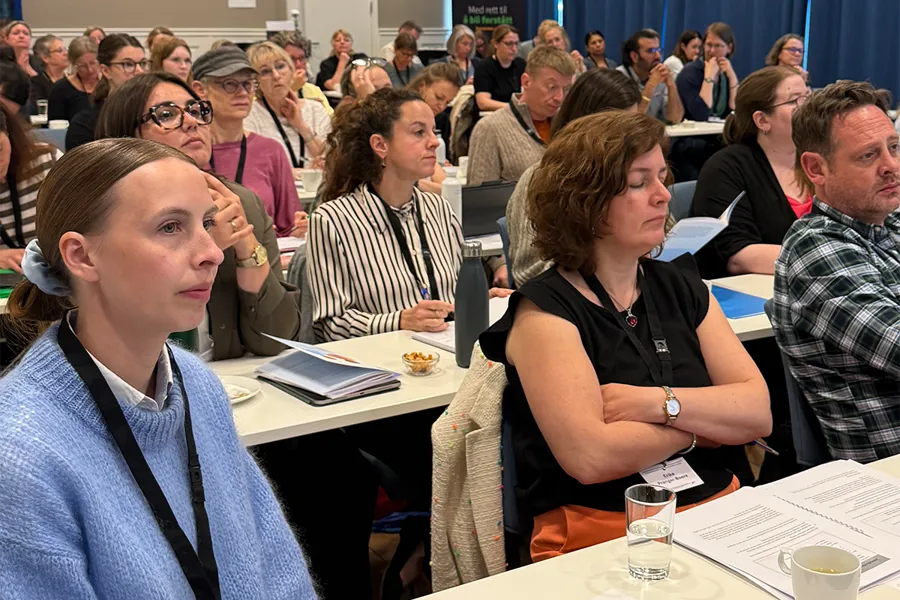
20–22 May, professionals, researchers, and clinicians from around the world gathered in Tromsø for an international symposium on the importance of the bodily-tactile sense for learning, development, and participation among people with deafblindness. Particular attention was given to tactile working memory and how it can be assessed.
Opening New Opportunities Through Tactile Communication
Professionals, researchers, and clinicians from around the world gathered in Tromsø to explore how bodily-tactile communication and tactile working memory can support learning, development, and participation among people with deafblindness. The symposium showcased emerging research, practical applications, and the value of international collaboration in advancing the field.
The symposium was titled Assessment and Intervention Across the Sensory Modalities: Understanding the Importance of the Tactile Modality and focused on how the Tactile Working Memory Scale (TWMS) can support development and participation for people with deafblindness.
Global Expertise Across Disciplines
The symposium brought together professionals from a wide range of fields, including psychology, education, communication, rehabilitation, and physiotherapy.
Speakers included researchers, psychologists, and educational specialists working in tactile cognition and learning, consultants in the field of deafblindness, teachers, university lecturers, and clinicians involved in interdisciplinary assessment teams.
Several speakers have contributed to the development and implementation of the Tactile Working Memory Scale - an assessment tool used to identify and support tactile working memory functions in individuals with congenital deafblindness.
TWMS is based on dynamic and relational approaches to assessment and intervention, where evaluation, learning, and environmental factors are viewed as interconnected.
Bodily-Tactile Communication as a Foundation for Learning
A recurring theme throughout the symposium was that bodily-tactile communication is not only about interaction but also forms the basis for cognitive development, learning, and participation.
Several presentations demonstrated how touch, movement, bodily interaction, and shared tactile experiences support attention, memory, and understanding. Presenters also highlighted how environments and communication practices must be adapted to support tactile learning.
Translating Assessment into Practice
Several presentations showed how assessments of bodily-tactile functions can be used to develop concrete interventions in schools, families, and adult support services.
One presentation described a collaborative project between staff at a day center and professionals in the Swedish deafblindness field. Over the course of nearly a year, the team worked systematically with tactile learning strategies alongside an adult man with congenital deafblindness.
Using video analysis, reflection, and practical interventions, they explored how the individual could be better supported in daily activities. The presentation demonstrated how hand-under-hand guidance, consistent routines, and tactile cues strengthened understanding, memory, and participation in activities such as handwashing and object handling.
The project also led to changes in how staff understood the individual's abilities and potential.
The Importance of Early Intervention and Collaboration
Several presentations emphasized the importance of early intervention and close collaboration with families.
A presentation from Canada described work with a young child and the child's family following migration and a new diagnostic process. It emphasized how trust, relationship-building, and predictable bodily-tactile routines became central elements of the intervention.
The presenter also stressed the importance of making professional recommendations understandable and practical for school staff and support services. Successful bodily-tactile interventions depend on strong collaboration among professionals, families, and the people who support the individual in everyday life.

Tactile Learning Strategies in Braille Literacy
Tactile learning strategies and the development of Braille literacy also received considerable attention during the symposium.
Presenters demonstrated how children must first gain experience with textures, movement, spatial awareness, and bodily interaction before tactile symbol systems such as Braille can become meaningful.
Discussions focused on how tactile learning strategies can support both communication and the development of reading and writing skills over time.
The Regional Center for Deafblindness has also published a booklet describing various learning strategies that can support tactile working memory.
Global Cooperation for Better Outcomes
Throughout the symposium, the importance of collaboration across professions, services, and countries was repeatedly emphasized.
Teachers, psychologists, therapists, researchers, and family support professionals shared experiences from working with children, adolescents, and adults with congenital deafblindness, with particular emphasis on bodily-tactile communication, learning, and participation.
The symposium provided participants with opportunities to strengthen existing partnerships, exchange knowledge, and further develop international expertise in the field of deafblindness, while also reinforcing Tromsø's role as an important arena for knowledge development and international collaboration.